Saturday, June 23, 2012

Red Dawn: The Pluto/Uranus Square


The sun rises, shining a deep, red hue over the cityscape, drenching the still-sleeping populace in its unwavering light. The tides have turned, and the hour draws near where those that have kept quiet will emerge from the shadows, enacting vengeance upon the wronged.

The planets have no doubt bestowed myriads of abuse toward the game-players over the past year. Perhaps, they have always known it would come to this. At once, the sleeping giants lay down their aggravation, and form a link of protection surrounding our fragile inner and outer selves.

Why the change of pace? For so long, Saturn, you have disrupted our efforts to build, establish, and balance. Now, your staff has been thrust into the ground, granting stability to our enflamed Moon before her dark transit through the past.

He glares sternly into our eyes, demanding our questions be silenced, for now. The mighty god carries the weight of his brow as one who has seen too much, and the Aquarian Age, far into the future, ripples in response.

The shamans, Pholus, Nessus, and Chiron, have retreated into ceremony. No doubt, our guiding light calls us home, offering shelter within the comfort of what we know to be family. The effect of our dreaming has begun to take shape around the planet, no longer individualized. 

"You are the waking dream," Neptune replies, continuing to find empowerment in the early charged degrees of Pisces. "This is no longer about you. The resonance and retribution of your inner selves have evolved, manifesting themselves in angelic countenance. Let them take flight."

Karmic forces reunite from the past, triggered by phrases and remembrances decided upon centuries ago, unlocking a hidden destiny. Our eyes flutter open to greet the day, the sun's rays granting us an extended calm. The birds sing with peaceful repose, and the average day progresses as one might expect.

What we do not see are the mystics at hand--a secret order floating through the shadows. The game is set; every cog in place, every wheel in motion, the universe in symphonic accordance with itself.

A neighborhood church echoes the familiar hymn:

"...the foe long since in silence slept;
Alike the conquerer silent sleeps;
And Time the ruined bridge has swept
Down the dark stream which seaward creeps."

Quietly, a sense is gathered: this brewing war is far different than what we have come to expect, and a stark revelation comes upon us. The transformation is cold and distant, stricken with subconscious ripples. The towers are dismantled from within.

"You stand at the precipice," Saturn speaks, conducting the congregation. He leans upon his staff like a crutch, his weariness revealing itself. "Your reality is doomed to be broken. Let go of concept. Let go of religion. Let go of understanding. Soon, you may lean upon my staff, and allow it to be your reason."

At that moment, the roof of the church flies open; brick and mortar spiraling upward into a swirling vortex. Saturn has opened the Portal of Time, and an array of Universes lie above us, asking to be explored.


[Check out some of the books, albums, and soon movies produced by Mythos Media and our various media partners.]

Saturday, June 16, 2012

Descent to the Merkavah/ Part 1

By Brian George 

1

“Man’s quest for immortality, to ‘live forever,’ or to be self-sustaining in one way or another is modeled most economically by the vortex. ‘Looking into the world,’ he observed the vortex in fire, wind, and water, and in the weave patterns of the heavens above, etc. When, whether consciously or subconsciously, he recognized that vortexes represent ‘the only manner by which a self-sustaining motion can exist in a given medium’ (Arthur M. Young), he would naturally have gravitated to such an idea—specifically, the idea that a vortex appears to be other than the medium which sustains it, but actually it is one with the medium within which it exists.”—from Martin Farren, “In the Mirror of Creation”
__

My explorations in Kabbalah and Kundalini yoga had led me in and out and upside down through the convolutions of an arcane curve, and deposited me, at a different turn of the spiral, again exactly in the place where I had started. It was in this position that I had always found myself—as a stranger with a social slot to fill, as a non-local presence with a local job to perform, as an ancient soul at a perpetual beginning.

As from a height, I had descended to a vehicle, and, from solid earth, into a state of watery flux.
There, the laws of electromagnetism could not be taken at face value. My evolution followed the path recommended to the student of Kabbalah—the “Path of Descent”—which was also the path taken by the first imploding hypersphere and its crop of unpronounceable gods, the Elohim—as they are called, for the sake of convenience, in this system. The name is a generic one, and, in contemporary terms, we could perhaps refer to them as “The Powers That Be.” We suspect—only—that they are powers now, although, in some respects, they seem close to being programs. When, amid flashing lights, they choose to put in an appearance, at times there does seem to be something of the manikin about them, and it is not clear if they really “act” at all. We do not know what they were before, or how they came to be in charge of the technology that projects us.

Friday, June 08, 2012

New LSDs Bath Salts Zombies and YOU


Direct link.

We are going to take a break from our usual material here for this Public Service Announcement. Please pay attention to it, unless if you want your organs to basically burn up alive. Also see this Disinfo expose on a possible theory about the truth behind the bath salts / zombie "craze."

 From the creators of Gonzomentary.

 [Check out some of the books, albums, and soon movies produced by Mythos Media and our various media partners.]

Tuesday, June 05, 2012

Fragments On life, death, suffering, and becoming art.


By Sascha Idakaar

The past two weeks I've been moving. Now I'm surrounded by boxes.

I wanted to pen a few of the thoughts that have occurred to me over those two weeks, in no particular order, although I think they overall present some kind of fractured picture of the thought process that is overlaid atop hidden experience. I don't mean any of this to be abstract. I don't mean it to be anything at all, they are just the things I have been wrestling with and thinking about these past weeks, so it's a series of mental snapshots. I'd like to think this will be useful or at least entertaining or informative for some of you, but that is for you, and not me, to say...

---
On the Ocean. 
Life is always swimming against the current. That's its defining characteristic. When it is full of vitality, we can even swim upstream. What progress we're making! Eventually that vitality flags, and all we can do is maintain. Then, either all at once or very gradually, we are slipping backwards and the current fully overtakes us. We are swept out to sea.

That is beautiful or terrible, depending on how you feel about what was left behind, depending on how attached you are to you. But this is all we know: we came from the sea, and we return. It is inevitable.

---
On the myth of The Story. 
Even the words we use mean different things to each of us. A story is not a story, singular. It is, potentially, as many stories as there are readers breathing life into those dead husks.

Designer Drugs, the Zombie Apocalypse, and You

homeless bath salts 

A Modest Proposal: 2012

By Rusty Shackleford

Some of you may remember a piece written by myself, no less than a half a year ago, on the potential of chemicals included in head shop designer drugs to chemically lobotomize the user and to effectively dissociate the hind brain from the frontal portions of the brain. The drug would then essentially paralyze the frontal portions of the brain, leaving a human being concerned with only the most rudimentary functions of the limbic brain: fucking, eating, and killing. 

Welcome to 2012. The only difference is that at the time, we postulated that such an effect could be achieved through chemicals sprayed upon "spice" packets sold in headshops containing active agent JWH-018 which is, in and of itself, a fairly unknown quantity. Since then, I have watched with a growing interest as report after report published on the internet, major news networks, blogs and newspaper articles have hit with new details on "zombie cannibalism attacks" generated by "abuse of bath salts, superacid, etc" depending upon whom you ask. Enter "Kapin Trips" (tm).


The substance in question

The following excerpt is from an anonymous tip off I received via the e-mail from a former organic chemist working for a company that I will not name. Suffice to say, he made me very certain of his credentials, and that the company in charge of this operation has its hand in a lot more than just legal recreational drugs: It goes deeper than you could ever imagine, and it is completely horrifying.

[Related topic: "Project Know" !]

He wrote to me after having read my piece on the use of over the counter or legal head shop drugs in creating armies of drone assassins. He asked me how I knew, and how I had discovered this on my own without any apparent insider knowledge of any of these events transpiring. The following is an excerpt of our communication via e-mail, verbatim except where omissions of titles and names were necessary for anonymity's sake.

Sunday, May 27, 2012

Nyssa: A Dark Modern Fairy Tale

By James Curcio

"A modern dark fairytale." Or so I say... I realize it is considered in bad form to analyze your own work. In some ways we're furthest from it. But I'd like to make some crucial points about storytelling, especially within the framework of a modern fairytale. Why not a story I wrote?

Sea Fang by Stas Prohortsev
So, Nyssa: Love Notes To A Stranger.

What is this story really about? What is the nature of a fairytale but to use elements of the unreal to talk about dimensions of our psyche, or psychological experience that are quite real?

I wanted to create the first issue of a series told not by the protagonist but by someone else. And I wanted to make it an unreliable narrator, a narrator who gives us this protagonist almost like she is hidden in the shadow created by his projection. I spent about two months thinking about writing this seemingly simple short story, because this was a challenge.

Not that the initial semblance of who and what Nyssa was took very long to germinate. I got my initial concept in a few minutes, on a cold overcast morning sitting on the subway on my commute to work when I was working as a UI designer for TLA.

But I wanted to open up the opportunity for an ongoing series about a character, and I didn't want to introduce the character from the inside. So it took me a good two months of thinking to figure out the angle I wanted to take. We're talking about a 3000 fucking word story here. I almost never take so long on such a small amount of text.

As I said, we first meet Nyssa from a distorted perspective. The protagonist doesn't really know her, even though he is increasingly obsessed with her. In that same way you don't really know the barrista you have a crush on. They're like these far off symbols to us, that we dream of one day having a real relationship of some kind with. But generally, that never comes to be.

Saturday, May 26, 2012

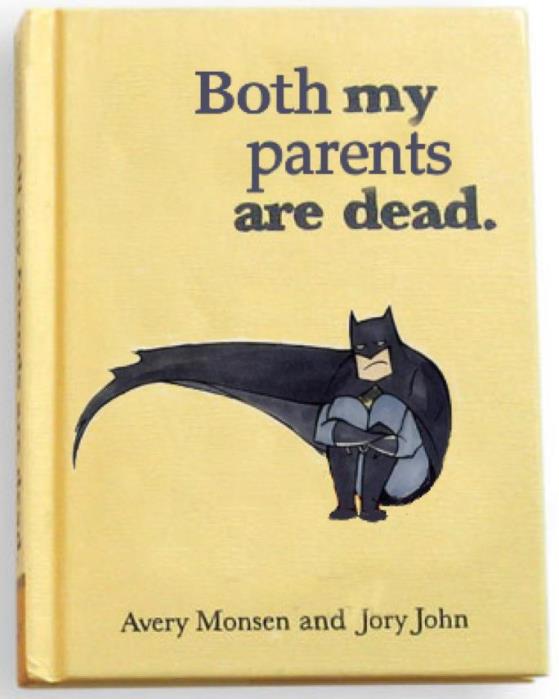
Batman: Masks of Shamanism


By Sascha Idakaar

The mask is an idea, a symbol, we could look at from a million angles. It is, even at first glance, our double, a close relative of the mirror -- but it is something other than the mirror. The mirror shows us our double. A mask creates a second double atop us. It transforms rather than reveals.

At the same time, a lot of psych pop lit has been written about Batman. But I'd like to use Batman as the pop culture model of the role of the mask. 

What is Batman, really? 

Is is a story about how an emotionally disturbed, very rich young adult deals with psychological trauma that he cannot let go of. Some ideas, some emotions, are things that we hold onto, and they are done with us the moment we are done with them. But others have us in their clutches, and they are only done with us when they are ready. This becomes a subject of subconscious, and the only way to deal with such things is to try to find a way to speak the language of the subconscious. Not just the subconscious, but our subconscious. Every single one has a different symbolic and emotional makeup. Any therapeutic system that misses this will basically be a crapshoot, whether that system lines up well with the stories that are embedded inside of you.

"It’s not a hobo beard. It’s a writer beard."

This was actually the typewriter of demon frog "fame."

(This is a rough draft that mashes up some of my contributions to The Nervous Breakdown and other thoughts into what I hope to be the only piece I ever write 'On Writing,' for the next issue of Scree Magazine.) 

By James Curcio


It’s not a hobo beard. It’s a writer beard.
Jamie Curcio

It's hard to remember when my addiction started. I remember hammering awkwardly on an old-style typewriter about a demonic underworld that existed in the basement of a house we lived in. We had to go down into the basement in the cold and the dark and shovel coal to keep the house warm, and the story had something to do with the frog demons that lived down there and the boy that had to brave them every night to keep his family warm. Really deep stuff, clearly. I actually don't know if that is relevant to anything, but you've got to admit it's kind of cool I remember a story I wrote when I was eight or so.

I think it was my first time, but I could be wrong. Freud call these "screen memories," which basically means they are picture-stories that we use as memories. They are like the seeds of the story that we construct about childhood, because, you see, memories are a form of story. Everything about us is based on stories.

Our sense of identity, all our beliefs even, are narratives, and this is why politics demands narratives that draw us in, whether they act on our intellect or our emotions. We think we can get some sort of real or fixed sense of the past. Of history. Of what really happened. But the fact is that all these narratives stand between us and that speck of dust that is some point in the past, long since vanished past the event horizon of clear recall. We conjure it back, perform some sort of neurological magic trick, and think we’ve painted something more real now that it’s been brought back to life.

I guess I’m saying we’re all story junkies. This is a confessional, but I’m certainly not alone in being unable to kick the habit. Don’t judge lest ye judge yourself.

Once I got past stories about frog demons, I started writing for a dual purpose. I wanted to gain a better sense of myself, and at the same time I wanted to communicate with others in a way that was deeper, than, well, the stuttery and awkward attempts at communication I try when speaking on the fly. In other words, there is an internal “me” that does not easily come out socially, in the moment. And I think that “me” has a lot more to say than the off-the-cuff, needs a tequila to be able to talk easily with a stranger... on a good day, "me." But maybe “he” doesn’t. Maybe he’s a psychopath. Guess you’ll have to read “his” stories.

My point is that my brain moves in twenty directions at once and it's almost impossible to cogently communicate with someone as clearly as I believe I can with text on a page. Yet after years of publishing books and blog posts, I've come to wonder if I have in the process proven myself to be the very source of the kind of alienation that set me on the path of writing in the first place. In other words, the better “he” gets at communicating, the worse stuttery-in-the-moment me gets. This is the literary equivalent of a K hole.

Thursday, May 24, 2012

Redefining the Real


The Inner College

Redefining the Real: Metanarratives and collaborative fiction writing as a blueprint for social change.

By Dr.* Shackleford

 
(*this denotes honorary ordination and doctorate in metaphysics, College of Aetheric Sciences. The following is an excerpt from a lecture series from the curriculum of the College of Aetheric Sciences.)

 
Good morning, class. Today we're going to be exploring the boundaries of what is termed "consensual reality". The memetic structure in question, henceforth referred to throughout as "consensual reality", seems to be at a glance fairly self-explanatory. On the surface, anyway. If you look at the world around you carefully, it shouldn't be difficult to spot the mass hallucination sold to all of us as "real." Make no mistakes, this is by design. The people actively working to build your worldview for you are paid very well to do just that.
 
Millions of dollars are given to well paid and extremely intelligent social engineers every month, as they attempt to discover new methods in which to propagate and to reproduce certain cultural norms, lifestyle decisions, elements of pop culture, fashion trends and other subtle forms of manipulation. Perhaps one of the easiest ways in which to spot the crack at the seams of a mass manufactured take on reality is a well rounded study of American politics. On this level of sociological study, most humans with even half a brain left to make free and autonomous decisions for itself can readily spot the manipulation of language. American science fiction writer and Theological Prophet Philip K. Dick once said that "The basic tool for the manipulation of reality is language. Control the words, and you can control the people who use them." Do you believe that?
 
I here pause to pull up "America Eats Its Young" by Funkadelic on my playlist and spark a small pipe of hashish...

Tuesday, May 22, 2012

Distributed networks: Thoughts, one subway ride

By James Curcio


Thoughts, one subway ride. It is always concerning to me how much the El in Philly smells like an electrical fire. When you're in a metal box hurtling at 50mph, it seems to me that you don't want it to smell like an electrical fire. 

We are distributed networks within distributed networks within... Ad infinitum. The network runs across each scale as a slice but also between all scales. That's how it works. "Real" was an enlightenment era misnomer, which sought to stake out an unmoving point or common ground (axis mundi) within that everchanging mess, or even the hope of emergence.

Maybe real can mean many other things too, depending on the context. But the point at which real had any sense, any, er... real sense... died with the Enlightenment. (See also The Immanence of Myth if you care about this line of thought because I'm about to drop it.)

Why? Because, that's beside the point, I don't want to totally miss my train of thought -- or my stop -- but yet so is this. There was an asian girl sitting across from me that made my heart skip a beat, and the homeless man behind me smelled of mouldy old cheese. Talk about cognitive dissonance. I see so many beautiful people every day in this city, so beautiful that I just want to cry. And so many broken, twisted things that exist purely on pity or hate. It's all so confusing. And the electric system was messed up as usual so the stop announcements were all reversed. 15th street... 30th street... Was time going backwards? The signs not lining up with the actual stations was weird to me too, though no one else in the car seemed phased. It happens all the time. It shouldn't be weird. It just felt significant somehow but I pinched myself, no I mean I really did, and reminded myself that this was all a red herring. Don't lose the original thought.

Is the emergent consciousness (in the case of the distributed networks of our bodies, the "I") centralized, or is it an autonomous illusion required at a certain level of complexity to apply a will to that one network node?

Let's bring it back to ourselves again though. See...The hard part is, remember when that cell in your lip died? Me either. That's what we are, as a node in the distributed network within network within network.

The flip side is this. Any node can, theoretically, access from the others. As we evolve, if we evolve, we can call on the greater organism more, and more. That is the main optimism I hold for the future, though it feels to me that the challenges we face in the next century we just aren't prepared for.

Still, if humanity has a future, that is it: understanding the true power of distributed networks, and recognizing both our power and relative insignificance. And I won't even begin to conjecture what that would need, aside from the thought that the NWO myth of it occurring through fascism and control have already been proven false a million different ways. Look instead to ant colonies, and to bee hives.* When will humanity act, for the most part, toward the common good of the hive? If never, then it truly will be 404. File not found.

I reached my stop, and scattered out and about like all the other little ants, doing our important unimportant chores, having evolved to the point where we can see a top-down view if we see fit to do so. But then I  think about all the torture we inflict upon one another, sucking our planet dry so that we can kill one another -- and my mind goes blank. 

* This was also talked about at length in The Immanence of Myth


[Check out some of the books, albums, and soon movies produced by Mythos Media and our various media partners.]

Saturday, May 19, 2012

Writing For You


On a lark I thought some people might like it if I chose which of the Mythos ebooks to send them. So at some ungodly hour I posted on Facebook:
Alright, bitches. Look. Got like 8 counterculture books here that aren't going to read themselves. Think of them as quasi-informational drugs that they probably won't put you away for owning.

The deal: if you paypal me $2+ I will pick which book to send you.

jamescurcio at gmail is the account to paypal, and do alert me here or otherwherez cause paypal doesn't always actually email me.

I can promise with absolute assurance that it is better than a starbucks latte. Though obviously they have you more addicted.
To my surprise, it turns out that some people would rather I make the decision of which of our books to read. Weird. I guess more choices are not always better. So, instead of making it a one day offer as I previously planned, I will continue to do so until the end of the month.

Donate $2 or more (see above)

And get a book.

Please include your preferred format (PDF, mobi, epub), and either some of your favorite books, or something completely random and unrelated to books.


Look. I was a child once. People that were once children should be given money via Paypal.


Tuesday, May 15, 2012

The Alchemy of the Word Part 3


Part 3: Loading Language
By Aubrey Zich

"He understood for the first time that the world is not dumb at all, but merely waiting for someone to speak to it in a language it understands. In the fairy's song the earth recognized the names by which it called itself."
— Susanna Clarke

As I've said previously, language is malleable.  It can be pounded, melted and smelted into shapes that have meaning  One does not need to go as far as to create a new word to control it.  Meaning can be assigned and changed if the will or desire is strong enough.  One point my mother tried to reinforce to me as a child was, "You cannot change the meaning of a word."  What she actually meant was, "You can, but you shouldn't."  Altering meaning changes intent, opens doors of  mixed blessings-- depending on one's ultimate goal.

If you've ever had an academic debate (or any serious sort of debate) with an English Major, at some point it will degenerate the literal meaning of one's word choices, their relative position in a sentence and their juxtaposition to other words one said or wrote previously.  At this point, you will both be required to pull out the agreed-upon standard for language, generally the Merriam-Webster English Dictionary, and start defining each word by what it actually means. 
 
It is important to understand the meaning of a word in its truest form.  It prevents it from being corrupted by emotion or influence.  When a group of people accept a definition it becomes common.  It also gives the word its power.  If one does not know the true essence of a word, it can be co-opted and corrupted.  
This is especially true for words based on intellectual or political concepts.  For example, the word "feminism", which Merriam-Webster defines under the first definition as "the theory of the political, economic, and social equality of the sexes" has been associated with images of man-hating bra burners.  This association has altered the meaning of the words substantially from its true essence, one of acceptance, to one of conflict.  

Once I told a friend "You're wrong" and he pointed out there was nothing wrong with him.  However, there was something wrong with my contextual usage of the word "wrong" and it is always wrong to use "I think you're wrong" as an opening statement of a disquisition.

Saturday, May 12, 2012

The Alchemy of the Word Part 2


Part 2: Wordsmith

By Aubrey Zich


"I invented colors for the vowels! - A black, E white, I red, O blue, U green. - I made rules for the form and movement of every consonant, and I boasted of inventing, with rhythms from within me, a kind of poetry that all the senses, sooner or later, would recognize. And I alone would be its translator."
-Arthur Rimbaud ("Season in Hell" Delirium II: Alchemy of the Word)


In order to make the unknowable tangible, significance must be assigned. As Kant said, "Ding an sich"; thing-in-itself. We name what we do not know in order to master its properties. Since language is malleable, one can create new words to describe a technological shift and these words enter into our lexicon. One can see examples of this in verbs such as "tweeting" or "Xeroxing" and proper nouns that are actually brands like "Band-Aids" and "Kleenex." It is the hope of every marketing team that the trademark name of the product surpasses the definition ensuring its superiority about all others. "Scotch Tape" conjures a very specific image of type of tape, where the word "tape" itself can make one think of anything from cassette to adhesive. If one was to say, "I brought the tape," the listener must have a previous known context in order to understand which type of tape the speaker has with him or her.

But what if you can get to world to co-opt your own language? What influence would you have as the creator? The company Apple has essentially branded language in their own way with the popularization of the letter "i" before products such as the "iPod" or "iMac." Aurorally, it puts emphasis on the individual and the product. However, visually the product has more weight than the individual by capitol letter emphasis. As an alphabetic sigil, it serves to establish who is in control. There are very few people who have said the word "iPhone" and have not seen it written in Apple's shiny font face. This "i" trend has become so popular that other companies have been co-opting the "i" for their own products unrelated to Apple, ensuring Apple's linguistic endurance as well as the individual as a secondary consideration to the product.

It is also possible to re-invigorate old language and repurpose it. Snoop Dogg brought the use of izz-speak from the 1970s jive back into popular lexicon (coincidentally, few years after asking the question "What's my name?") and made it his own.

If you create a word, you control it. It is your word. You can alter and change the meaning as you see fit. You alone are the translator, dictating its pronunciation. You create the sigil the represents it. The intention behind the word is yours alone and therein lies your jurisdiction. The creation of words and "smithing" of language is a powerful tool and it's applications range from building community to outright mind control.

More of this in Part III: Loading Language

[Check out some of the books, albums, and soon movies produced by Mythos Media and our various media partners.]

Thursday, May 10, 2012

The Alchemy of The Word Part 1


Part 1: A Brief and Incomplete Mythology of Naming
By Aubrey Zich


"Naming is a difficult and time-consuming process; it concerns essences, and it means power." Jeanette Winterson (Oranges are not the Only Fruit)

There are many ways to tell this story, but this is variation I know best. In Israel, there was a temple gate guarded by barking dogs. These animals would sound at the passer-bys, jarring their thoughts and causing a temporary mind lapse. Anyone who knew the ineffable name of God would soon forget it as they passed. Jesus, who was not so much a prophet as a magician in this tale, performed miracles using the name of God. Knowing the perils of passing the temple, Jesus took the ineffable name placed in a note under the skin of his arm. (ie: a tattoo.) When Jesus passed the temple the barking startled him, as he knew it would, and forgot the ineffable name. However, since the name of God was tattooed on Jesus' arm, he was able to recall it and continue to perform miracles.

Qabalists claim ineffable name of has 72 parts and whomever can master the correct pronunciation can alter reality as he or she sees fit. However, mispronunciation can also cause instantaneous death. Words are the living, reality-altering magic. Each character is a sigil within itself containing its own meaning. When combined with other sigils, the characters creates two stories: the obvious path of language and the hidden path of pictographs.

The significance of knowing a true name crosses cultures: from the miller's daughter getting out of a deal with Rumpelstiltskin to the Youruba myth of Orunmila only being permitted to marry Oxum once he discovered Oxum's true name. Not only is the precedent set in our myths and fairytales, but also in popular literature and Tv programming. (For those interested, wikipedia has a list of a few examples.)

Modern music places great significance on not only knowing a name but on a magical "alter ego" name. Marshal Mathers performs under two monikers which represent his different manifestations: his light side, Eminem, and his id-driven primitive side, Slim Shady. Marshall Mathers is not the only one. In order to make a directional change, Beyonce Knowles developed her alter ego, Sasha Fierce. Later, Beyonce claimed to have "killed" Sasha Fierce, absorbing Sasha's powers for her own.

One of the most interesting examples of name alchemy is David Bowie. Over decades he has been able to keep current by changing his personae and naming its essence. After the album "Hunky Dory", David Bowie declared that his next release would be huge. He distilled the essence of a rockstar and magnified it to ridiculous proportions, almost beyond recognition. Then Bowie named his concoction "Ziggy Stardust and the Spiders from Mars." As Bowie predicted, it was his break-out album. (Editor's note: There is an extensive exploration of this topic in The Immanence of Myth (Weaponized) and some follow-up consideration in a series of articles in Apocalyptic Imaginary (Mythos Media).)
Can one really control your environment and the things around you by the act of naming? Well, yes and no.  Let me put it to you this way: one may come to understand the true essence of a stray dog, even enough to give it a name.  One may even tame the dog enough to make it a pet.  But if one angers the dog, no matter what one calls it, the dog will still bite.  

More about this in Part II:  Wordsmith


[Check out some of the books, albums, and soon movies produced by Mythos Media and our various media partners.]

Wednesday, May 09, 2012

Body Modification: Freak or Not Freak


Alright, there is far too much that could be said on this topic for one blog post. It would fill twenty books. So please don't mistake brevity for lack of consideration.

Geekology has presented us a great example to look not just at some of the newest trends in body modification today, but also to make a point about latent or mainstream standards of beauty, and the backlash it can cause.

I'd like to provide for you exhibit A, a Ukranian girl who has surgically modified herself to look like a barbie:

Note the tone of the post:
This is 21-going-on-6-year-old Valeria Lukyanova (links to her Ukranian Facebook-y thing with LITERALLY 10,000 more photos of Little Ms. Vain). Valeria always dreamed of being a real life Barbie doll. And now, after numerous surgeries, she's finally realized her dream AND CAN HOPEFULLY MOVE ON TO ACTUALLY DREAMING ABOUT SOMETHING WORTHWHILE. Wow, of all the dreams in the world to come true of course it's squandered on the girl who wants to look like Barbie and not everybody hoping for a cure for cancer. "That little bitch." *pointing* That girl said it, not me!
Can someone please point me to the place where this sort of body modification differs from cat man?

Or even our resident Satanic freakazioid, Rex Church.
(Tangent alert: I met him at Esozone, a sort of "alternate culture convention" where a lot of totally freakish knowledge was done dropped. I was on a panel with him about ritual magick and artistic creation or something and he leaned over and said "you smell nice." Ookay. So yeah, that's not relevant to this post but it's my one personal interaction with the guy. I really can't figure out if my smelling nice is a good or bad thing in this context.)

Look, don't get me wrong. I think Barbie girl is creepy too. And I'm not entirely sure it isn't a hoax and those are all actually photos of RealDolls. (Did you know they used to make Dark Elf RealDolls? I can't seem to find them on Google anymore so that must mean they don't anymore.)

But I think we need to be incredibly vigilant about our bias about these kind of judgements. All of these are cases of people modifying their physical body to in some way match some internal mental image. Whether you think you should physically appear as a dragon or a dark elf or a barbie doesn't matter, it's just that

Barbie is mainstream and has a lot of associated cultural baggage. Like the fact that part of Barbie's marketing programming has been about making little girls want to look like fucking Barbie. That is how a lot of marketing psychology works, because companies want to figure out how to sell and the best way to do that is to reverse engineer the psychology of your market. Surprise! Your little daughters brains are being scoped out by corporations as living breathing targets for their product development. That's just life in the world / society we live in.

We totally. TOTALLY support Obama's right to
turn himself into....whatever the fuck this is.
(Photo by Photoshopaganda.
USED WITH EXTREME PREDJUDICE.
I mean permission. Permission.)
So if we want to change that we can change what sort of messages we're broadcasting to our youth to you know, sell different products, because every little girl wants to be genetically modified to look like a robot with arms made out of carrots or something, right?, no actually most marketing is based on the biological predelection of humans living at a particular place and time, so there's actually a reason that Barbie looks like she did when marketing to the youth of 1960s America rather than a vampire squid with rotating tentacle biolumanescent arm attachments.  But that's subject for another article!

[As is any discussion of the fat / thin issue.]

So, point is, accept that your judgement of Barbie girl as freakish is the same as calling cat-man freakish, I mean, hey, it's OK to think they're freaks but at least own it across the board so you're not a damn hypocrite, right? Because there is something culturally abnormal about actually going through with it and doing something like this, or else everyone would be doing it and it wouldn't be abnormal anymore.


[Check out some of the books, albums, and soon movies produced by Mythos Media and our various media partners.]

LinkWithin

Related Posts Plugin for WordPress, Blogger...