Showing posts with label comics. Show all posts

Tuesday, February 17, 2015

First Tales From When I Had A Face Contributor Announced


The first contributor I'm going to announce here is P. Emerson Williams. He'll be doing storyboards and pencils for all the comic sections in the 4 issues of Tales From When I Had A Face: The Summer Tree, The Fall Tree, The Winter Tree, and The Spring Tree. I've worked with him on a number of projects in the past, and am very happy to have him help me navigate the immense scale of this project.

---

P. Emerson Williams is an artist and illustrator whose work takes shape in physical and digital media, and covers wide modes of expression. His passion is for embodying the mythic in visual media and melding visual art with narrative form.

He illustrated Bedlam Stories - The Battle for Oz and Wonderland Begins, a novel set in the universe of Bedlam Stories, a twisted world of horror created by cult film director Pearry Teo (The Gene Generation, Necromentia, Witchville). among a number of projects coming up for P. Emerson Williams in 2015 is Adagio Fine, the first in the Star Crossed Chronicles, a series of heavily illustrated novels penned by occult author Nathan Neuharth.

As a core member of UK theatrical company FoolishPeople, P. Emerson Williams took on many roles in London productions of The Basement - Ward 12 - in partnership with Secret Cinema, The Providence Experiments - co-produced with Mythos Media, A Red Threatening Sky, The Abattoir Pages - presented with Guerrilla Zoo, Cirxus and Terra:Extremitas, performed at Amsterdam's NDSM-werf. These roles includes creating a score for choreographer lohan Stjernholm as part of the production A Red Threatening Sky and a solo musical performance at the famed Horse Hospital in London, creation of soundscapes and scores for every production on which he worked, as well as set and graphic design and on top of all this, Williams was in the cast as both voice actor and live actor.

Williams straddles the worlds of industrial music and black metal, electronic dance to dark Americana to pure goth with Veil of Thorns as well as adding elements of his sonic alchemy as a spice to projects with Sleep Chamber, Manes and more extensively as half of the creative core of kkoagulaa with cern.th.skei from Manes. Recent collaborations include playing cello on UK black metal band Ethernal's upcoming third album, subverting the nature of guitar playing with industrial noise merchants Dead Skull and a collaboration with avant garde trumpet player Mark Cunningham.

He is the host of the Necrofuturist Transmission on Nottingham's Nightbreed Radio, was the editor and producer for Music Tuesdays on Alterati.com, and art director for Weaponized , the publishing imprint of FoolishPeople. Articles and reviews by P. Emerson Williams can be read online at Terrorizer.com, Modern Mythology, Disinfo.com and Intravenous Magazine. His visual art can be seen on book covers and interiors for Original Falcon, Weaponized, and Westgate Press, the pages of magazines including Culture Asylum, Isten 'zine, Ghastly, and Esoterra , album and CD covers for Rat King, Primordial, Katatonia, Ethernal, Ptahil, Lethe, Misanthropy Records, SLEEP CHAMBER, Veil of Thorns, Choronzon and kkoagulaa. In 2013, P. Emerson Williams was on guitar and vocals on tour with the legendary Jarboe that took them through the US, Western and Eastern Europe and concluded in Moscow.

[All It Takes Is The Right Story... Mythos Media]

Saturday, December 07, 2013

The Religious Experience of Philip K. Dick by R. Crumb from Weirdo #17


“I saw God,” Fat states, and Kevin and I and Sherri state, “No, you just saw something like God, exactly like God.” And having spoke, we do not stay to hear the answer, like jesting Pilate, upon his asking, “What is truth?”

–Philip K. Dick, VALIS

In the months of February and March, 1974, Philip K. Dick met God, or something like God, or what he thought was God, at least, in a hallucinatory experience he chronicled in several obsessively dense diaries that recently saw publication as The Exegesis of Philip K. Dick, a work of deeply personal theo-philosophical reflection akin to Carl Jung’s The Red Book. Whatever it was he encountered—Dick was never too dogmatic about it—he ended up referring to it as Zebra, or by the acronym VALIS, Vast Active Living Intelligence System, also the title of a novel detailing the experiences of one very PKD-like character with the improbable name of “Horselover Fat.”

[Take a Trip with us... Mythos Media.]

Tuesday, September 03, 2013

Disinfo Exclusive: DragonCon 2013 – The Transmedia of Tomorrow: The Art That Lies To Tell The Truth

DragonCon 2013 Exclusive: The Transmedia of Tomorrow
by James Curcio on September 2, 2013


Fiction and non-fiction, fact and myth, often aren’t opposites.

These lines blend a little more every day. When these things play such a crucial role in our news as well as entertainment media, and in a world where social media platforms are often at the front lines of cultural revolutions, it is increasingly necessary that these things are understood. Join us for a discussion on this topic, along with links to a variety of articles that expand upon and support the limited amount that can be discussed in a 45 minute panel.

This three person panel is a truncated transcript of the initial Dragon*Con discussion, moderated by David Metcalfe. The other two participants were transmedia artist James Curcio and Damien Williams, who you may have caught at one of many other panels at Dragon*Con this year including “How To Be a Comics Scholar,” “Devouring Selfhood: Zombies In Narrative,” “Gender, Race, and Identities in Comics,” and many others. Links have been added to provide further context. Full bios at the end.

David Metcalfe: The novel or fiction format provides a lot of developmental potential for ideas to foment, for authors and readers alike. Personal mythologies worked into a fictional format can take on a life of their own. How has your experience been with that?

Damien Williams: I don’t have much recent experience but in the heady days of mIRC, I built a number of storytelling personas as what Grant Morrison referred to as “Fiction Suits.” Narratives to live as, to wear to bring certain elements of my life. Recently, I’ve tried it out with a narrative of my life as a series of breaths, in The Immanence of Myth, and a future version of myself, on Twitter.

James Curcio: I think the very ideas of ‘fiction’ vs ‘nonfiction,’ or myth as untruth are major barriers in creating honest mythic work. Myths don’t begin as “myths”. They begin as something that genuinely speaks to us. Narratives directly affect our nervous system. I believe you talked about that in one of your pieces in Apocalyptic Imaginary. And “myth” isn’t a claim of truth or untruth. So let’s try to clear that up right away. (Note: Fiction vs non-fiction in literature | Myth vs. untruth)

There’s a larger issue here. There are many interesting cases where the lines were blurred, but… let’s see. For instance, Jenkem is a case where a complete fiction was picked up by the press. Soon every news station was reporting that kids are getting high huffing feces. Various real atrocities were collectively reported as ‘zombie attacks’ in 2012. Fact and fiction aren’t opposites but this raises certain questions in regard to journalism. Questions that I think Hunter S Thomas divined in a drug fueled stupor. What is the responsibility of the writer versus the journalist, right? And what about the fiction of a writer or artist’s persona? The documentary Kumare raises this issue in the context of religion. He lied to tell the truth. Some others just lie. There’s a difference though many can’t see it.

Read the full panel. 

[Take a Trip with us... Mythos Media.]

Tuesday, July 30, 2013

A Dark Modern Fairy Tale

Now, for those that don't want the print version, the eBook version is available through Scribd, full color. 8 pgs of this unique illustrated story is free, full version $2.99.

Included after the fold, additional concept art and sketches from the contributing artists (credits on cover):


Saturday, April 06, 2013

What's your Superhero Origin Story?


Let’s get one thing straight. I hate the word Superhero, but I don’t hate superheroes. I think that’s because like many things, the overuse of hero has dis-empowered the word. A hero, in its original sense, meant more than mortal. A person worshipped, honoured and elevated above others. Some of them were demigods, others made it to godhood and had shrines raised to them which lasted beyond their deaths.


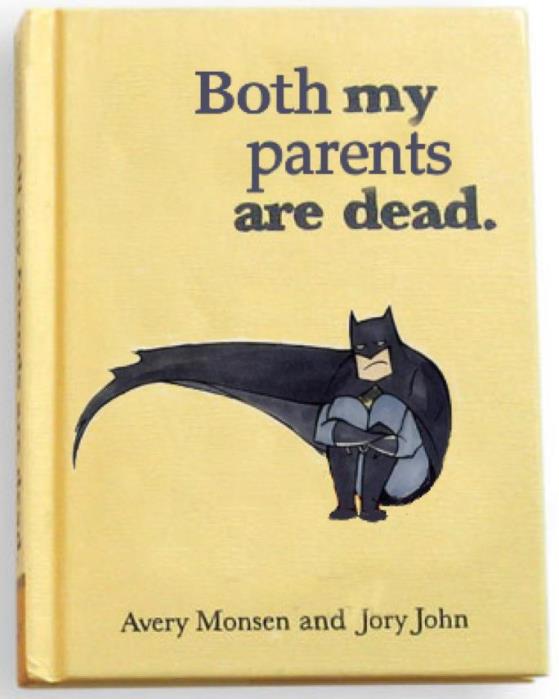
Superman is an alien raised by kindly adoptive parents, one of the last scions of a destroyed world. Batman is a man who is forged in tragedy, becoming a symbol which casts long shadows. Captains' America and Britain are elevated by science and magic respectively, to become symbolic as defenders of the world. The X-Men are mutants, set-apart by genetic quirk and the merciless pressure of evolutionary selection.

And all of them, all of them, have an origin story. They’re not just their powers - they’ve been shaped by their experience, those events which change them, make them different.

They do not stand in isolation - whether it be genetics, radiation, magic, or being child of a god, a hero is nothing without their origin. So, where does that leave us poor ordinary mortals who have our everyday lives? It’s highly unlikely we’re going to get nuked in a particle accelerator and come out with godlike powers. And yet, if you look, it is once again the apparently ordinary which they strive to protect.

Whether its the fireman, the paramedic, the doctor, the librarian, the alien ubermensch, the Dark Knight or the trench-coat wearing magus who chain-smokes his way through apocalypses, laughing all the while. Whether it’s the barbarian or the wizard, the soldier or the king, they all come from
somewhere. They don’t just pop into existence - they emerge somehow. Without the ordinary, they have no fuel, no way to claw their way into existence, to drive their stories.

So, let me ask you - where is it that
you come from? What’s made you who you are? Just think about it.

That hero was nothing without that
difference. Your neighbourhood, your childhood, your family, your beliefs, your food, your drink, your culture - all of these shaped you. You are one of billions on this planet; one of those staggering numbers which boggle the mind, force it to take shortcuts, to create categories like race, sex, gender, politics. All that to make sense of things.

Because gods forbid you look at yourself in the mirror and see the Mystery that you are. Gods forbid you conceive of the sheer wonder of life - not that it may have meaning, or otherwise - merely that it exists at all!

Look over your shoulder and imagine the countless choices that brought you here. Imagine the memories and nuances you have, which no-one else does.


Now:


Imagine all those things that made you what you were, and then look back at the screens and the newspapers and wonder - “Why the hell are they trying to get us to buy these things? Why the hell do they want me to conform to this body-image, dream this particular dream?”


You are the proverbial miracle, hiding in the common-place. The diamond in the rough - the commonest carbon compressed by a billion pounds of heat and pressure into a multifaceted gem. You may not have a nuclear explosion or genetic code that warps notions of humanity. You may not have billionaire status, or be a member of an alien aristocracy, but you have the fuel, the experience that you can arrange, the
difference that makes the difference.

And maybe, just maybe, it’s time to give up on the secret identity, claim your birthright and assume the mask of the hero.

***
 

Craig 'VI' Slee is a Consultant & Theorist dealing with Mythology, Folklore, Storytelling & Culture.

Currently, he serves as Writer and Content Developer for
FoolishPeople, an internationally acclaimed immersive theatre company who create ritual experiences, books and films. Their latest work is STRANGE FACTORIES, which will be released to worldwide distribution late 2013.

[Where is the fucking counterculture? Mythos Media.]

Monday, March 04, 2013

Free eBook of Chasing The Wish comic!

Produced in close collaboration with the late Dave Szulborski, the comic tied together his previous, massively successful ARG Chasing The Wish, with an ARG that was running simultaneously with the comics production and release called Catching The Wish.

Dave was posthumously named the World's Most Prolific ARG Producer by Guinness World Records 2012 Gamer's Edition.

Peter and I are happy to share this comic with you, free, in memory of Dave's creativity.

FULL BOOK 1 (PDF)
FULL BOOK 1 COVERS (PDF)

Chasing The Wish comic credits:

Written by: Jason Stackhouse with James Curcio.

Based on the ARG by Dave Szulborski.

Art: P. Emerson Williams, Jessika Kaos, James Curcio. 


Sunday, February 24, 2013

Fallen Nation: Welcome to the Apocalypse

Welcome to the Apocalypse. A free mini comic based in the Fallen Nation world. 
Illustrated by P. Emerson Williams, written by James Curcio.


Get the mini Free comic. 

Sunday, December 09, 2012

David Mack on sequential narrative.


David really hit it out of the park on this one, in my opinion. I don't really feel like commentary is necessary.

  Read our 2007 interview/conversation.

[Where is the fucking counterculture? Mythos Media.]

Saturday, May 26, 2012

Batman: Masks of Shamanism


By Sascha Idakaar

The mask is an idea, a symbol, we could look at from a million angles. It is, even at first glance, our double, a close relative of the mirror -- but it is something other than the mirror. The mirror shows us our double. A mask creates a second double atop us. It transforms rather than reveals.

At the same time, a lot of psych pop lit has been written about Batman. But I'd like to use Batman as the pop culture model of the role of the mask. 

What is Batman, really? 

Is is a story about how an emotionally disturbed, very rich young adult deals with psychological trauma that he cannot let go of. Some ideas, some emotions, are things that we hold onto, and they are done with us the moment we are done with them. But others have us in their clutches, and they are only done with us when they are ready. This becomes a subject of subconscious, and the only way to deal with such things is to try to find a way to speak the language of the subconscious. Not just the subconscious, but our subconscious. Every single one has a different symbolic and emotional makeup. Any therapeutic system that misses this will basically be a crapshoot, whether that system lines up well with the stories that are embedded inside of you.

Friday, July 09, 2010

Sunday, April 06, 2008

The Well


The Well


Rudy Rauben has unleashed another comic, the Well. Check out the panels of the opening episode here.

Alterati.com interview with Rudy Rauben.

Friday, February 29, 2008

Psychosis unveiled Garfield Minus Garfield

It makes so much more sense now.


And why is it that I feel like I can relate to Jon...?

Saturday, September 08, 2007

Drawing Outside The Lines: Interview With David Mack


issue01sample03-large.jpg


I still remember the first time I encountered Kabuki. I was just browsing around a Barnes & Noble, buzzing on caffeine, and this beautifully illustrated hardcover book found its way into my hands. It's not hard to be taken with the art, really, but I actually laughed out loud when I started reading it- there was a section where the characters were talking
to one another, and then moving through a building. Now most sequential artists would draw panel after panel of them walking and talking, West Wing style, maybe breaking it up with different angles and whatnot so it's not just a bunch of talking heads. But you just give us a top down view of the building, and little talk bubbles as they wind their way around the maze. I just thought that was completely brilliant... I never would have thought of that, but then looking at it, it's just like "of course!" This is something I've seen continuing through these books, that you are
really good at finding the straightest line, the best means of telling the story rather than just adhering to whatever storytelling conventions people might be used to.


David Mack: I like how you described that. I think you described it very astutely. That is how I approach the art. As a tool of the writing. I try to consider what pace, or rhythm, or medium or visual personality of style of art will best and most effectively communicate that particular story or scene of the story.

Full interview

LinkWithin

Related Posts Plugin for WordPress, Blogger...