Wednesday, April 27, 2011

Unlearning Reality : Afragility, Twitter, and Embodying Myth as Incunabula


I personally don't suffer with the problem that Hunter S. Thompson did, the problem which he elucidated in the 1978 BBC documentary, and James recalled in his post on Living and Embracing Ego:

I'm never sure which one people expect me to be. Very often, they conflict — most often, as a matter of fact. ...I'm leading a normal life and right along side me there is this myth, and it is growing and mushrooming and getting more and more warped. When I get invited to, say, speak at universities, I'm not sure if they are inviting Duke or Thompson. I'm not sure who to be.
There is no conflict between the myth and reality for me. The Roman numerals which make up VI are as much a signifier of my self-hood as the name I was given at birth. Gonzo is the insertion of self into the narrative - the breaking of the notion of objectivity. The author goes native, becoming a native of the text or medium.

Native has its roots in natal, relating inextricably to birth and innateness. There is only a conflict if you were ever born somewhere else; the ontological and cultural tensions induce a kind of schizoid existence.

A double life, like Clark Kent and Superman or Bruce Wayne and Batman. We've all read enough comics or seen enough of the films and other media to realise that this tension is manufactured by the environment we're in.

Clark Kent and Bruce Wayne are masks. Batman and Superman are the faces behind those masks. Those faces are the real identities, and they are made of myth, born of it. In Immanence of Myth James and I talk a great deal about the body, the corpus of myth as living flesh.

Whether it be the twilight world of cannibalism, butchery, or simply eating fucking and dying, the reasons for such discussions are horrifically simple:

Our bodies, these flesh and blood machines; by their creaking, groaning, pounding and pulsing they are our method of experiencing the universe, and they are the only one we will ever have.

Going native, becoming part of the narrative; this requires that you become myth. It is in a sense, a second birth, a second Nativity - to become the 'rough beast that slouches toward Bethlehem to be born'.

The body becomes the text, the medium. That is when you have become a native, when your very flesh has been juiced with myth, suffused with and marinaded in it.

It may sound insane, to aim to become a living being composed solely of myth; a thing of dream and nebuluous, quixotic creative potential. After all, if there is no dividing line between fiction and reality, one is insane, no?

Except, there's things like this, where fictional characters tweet supportive messages to the people of Japan:
In the light of last week’s events in Japan, a twitter account has recently surfaced with encouraging comments from previous heroes on tokusatsu shows such as Ultraman, Super Sentai and Kamen Rider.

Tokusatsu means 'special filming'. Of the like seen in, y'know, Godzilla movies or Power Rangers for those of us not up on Japanese culture. Miraculous effects.

This isn't some mystical 'becoming-myth'. No, it's an attempt to help people parse the enormity of a catastrophe. This is an attempt to give people hope.

And it's happening right now, in a so-called 'rational' age. Seriously, am I the only one seeing the connections here? As I said in my last post, albeit obliquely - Godzilla and fellow mythic monsters serve a need that goes way beyond rationality.

The Vanguard of a Perpetual Revolution/ Part 6


By Brian George

In “The Real,” Parmenides said, “And thus it remains constant in one place; for hard necessity keeps it in the bonds of the limit that holds it fast on every side. Wherefore it is not permitted to what is to be infinite; for it is in need of nothing, while, if it were infinite, it would stand in need of everything…

“Since then, it has a furthest limit, it is complete on every side, like the mass of a primordial sphere, equally poised from the center point in every direction; for it cannot be greater or smaller in one place than another.”—Adapted from a translation by John Burnet
__

“Four Scouts to the New World” was written several years ago, but I have chosen to re-post it now because of its connection to the crisis—i.e., the earthquake, tsunami, and subsequent near nuclear meltdown—that is unfolding in Japan. One of the central themes of the essay is that any and all “perfect systems” have an innate tendency to self-destruct. The Tao Te Ching says, “The greatest perfection seems imperfect,” and “That which approaches perfection will soon end.”

People tend to use the words “tragedy” and “disaster” as if they were interchangeable; they are not. A “disaster” is an event that appears to happen by itself, that is thrust upon us from the external world—although this may or may not ultimately be so. A “tragedy,” on the other hand, is an event that directs us reexamine and to probe the highly peculiar nature of human action in the world. The key point is: That the actor has done nothing wrong.

It is sad, then—if each actor is free to act as badly as he wants—that I am somehow disallowed from hating all of my enemies! And after I worked hard for so many years to perfect my occult point of view. In the end, my perspective is no better and no worse than yours.

Although faceless, perhaps GE executives from the 1960s are the true and unsung heroes of the story, for it was they who built the atomic plant at Fukushima—without which our general state of anxiety would have no point of focus. Conversely, although billions no doubt recognize his face, we should not assume that Obama’s role is of any great importance—not yet. Time will tell, as will we. There are no bad parts, only actors who are not prepared to take advantage of the moment, and who have not probed deep enough.

If the actor is to cultivate an other-than-human viewpoint, he must first confront the origin of his fear. Death calls the actor towards his own face in the mirror, at the same time that it warns him to immediately stay put.

Tuesday, April 26, 2011

Contending With The Myth of "Art For Art's Sake" (Interview)


James Curcio: ....Some people get the sense - like it seems you did - that I'm about “art for arts sake” or that I need to grow up or get more hard-minded about business. The truth is, I've written plenty of proposals and business plans in my day, I’ve been involved in quite a few media businesses, and profit is a worthwhile means to certain ends. But those ends are an increased sense of play and creative exploration - and struggle - rather than more profit. Drucker's maxim holds true: “profit is a means, not a motive.” Many people in this world have lost sight of that and it's plain disastrous. I don’t mean figuratively. I mean it’s destroying the planet, or at least, our place in it. 

Elizabeth Craig: I did get that impression about you. That's because you're a serious artist and I was making an assumption - the writers I tend to meet who consider themselves Artists (usually writing in the lit fic vein) give genre writers flack about commercial fiction. That's merely an observation, since it doesn't bother me...to me, writing is about serving readers and literary fiction and genre fiction both serve an important purpose.

JC: That's a fair assumption to make, about literary fiction and genre fiction. And you were probably reacting to a rant I put out about genres - but my gripe isn't so much the usual resentment I think some “literary” authors feel because genre fiction often outsells them and it's “crap” - it's with the idea that genres and the categories that we apply to things actually have any kind of reality.

Don't get me wrong, genres and categories serve a purpose. They can serve an absolutely necessary purpose. But they're still invented. It's the same thing you get where a discipline will take an issue and consider it “off limits,” as if it somehow doesn't apply to them because “that's a matter for anthropology, not psychology!”

I've been wrestling with the genre issue a little with my most recent novel, Fallen Nation: Party At The World's End, which I'm now looking to shop to agents and publishers. It falls somewhere between “dystopian near future sci fi” and “urban fantasy.” I wonder at what point these labels just become so absurd that we can let up with it already.

I know when I start talking like that some people think it must be because I'm unfamiliar with marketing or business, but quite the contrary, I've spent altogether too much time reading marketing reports and niggling about demographics. I think it is a potentially dangerous thing because as you said it's about serving readers, and there's a point at which publishers may think they know what people want more than they actually do when they're overlapping these genre ideas over what is actually motivating people.

At the same time, I know not to write any of this as the lede in my query letter. And if past experience is any indicator, it won't ultimately be a query letter that gets me talking to the right person at the right time. It'll be a random conversation at a party or even an interview. I've never had much luck painting by the numbers, though for some odd reason I find myself trying from time to time when things get rough, as if that approach is suddenly going to yield new results.

Let me give an example, to really reply to what you said. I agree that one of the primary purposes of writing is about serving readers. But you can't undervalue the value of writing itself, in terms of self discovery, in terms of its therapeutic benefits. What's interesting to me is that many authors say that if you're just writing for yourself, that's fine, but don't publish.

However, the times where I've tried to write for an audience and focus on that, a lot of people tell me that it doesn't ring as true to them as some of my other stuff, which I may have produced with no intent of making it public at all. It's a very odd thing, to me. In fact, I try to keep up with agent and publisher and writer blogs as much as possible but I'm finding that I really can't intentionally follow any of their advice, or if I do, I do so at great peril to my own work. Because people can tell. It sounds cliche, but it shows. Yet again the most important thing ultimately is to be true to yourself, whatever the hell that means.

Yet, at the same time, audiences want something that's familiar enough that they don't feel like they're being taken too far out of their comfort zone all at once. It's a very odd dance, and I will say that if I'm going to err on one side or the other I'd much prefer to err on the side that leaves them feeling uncomfortable rather than bored.

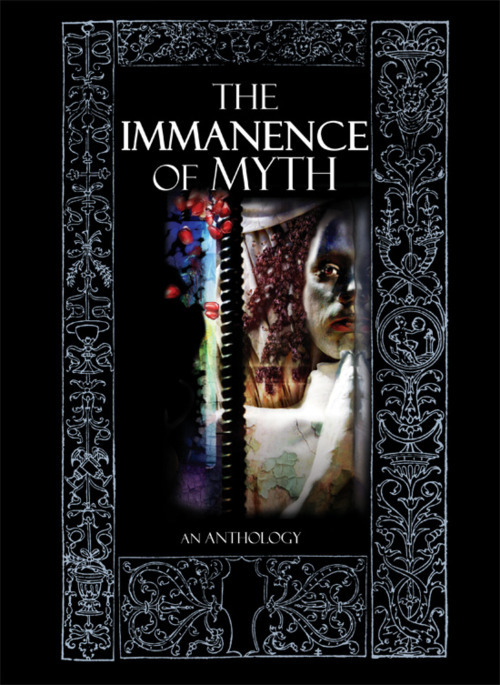
 Pre-order a copy of The Immanence of Myth, published by Weaponized in July 2011. (Or sign up to be notified of its release on Amazon.com)

Publishing Myths

by Elizabeth Spann Craig

Publishing is a changing world and it stands to reason that writers and publishers who are adaptable have a much better shot at survival than those who aren’t.

But how should writers and publishers adapt? One way, I think, is by realizing there are industry myths that might cause them to make poor choices. The danger is in not digging deeper for information and simply adopting these beliefs (some of which may have varying degrees of truth) as complete truths…and then being disappointed in the results later.

Indie publishing myths:

Online, I frequently find the fervent belief that indie publishing is the savior for those who haven’t been able to break into traditional publishing. Among writers pursuing e-publishing, I’ve noticed some misconceptions.

Myths that authors cling to that may make them choose indie publishing:


I will get rich with e-publishing. Even some formerly traditionally-published writers who decided to publish an ebook have run into problems or have found their books haven’t taken off the way they’ve hoped. As writer James Maxey put it in his post, Pouring Cold Water on the Kindle-ing :

It’s easy to talk about success. But the thousands of writers who self-pub their ebooks and sell less than 4 copies a month… they aren’t blogging about their failure.

Most readers have e-readers. Although they’re experiencing huge growth, e-readers are still working on making the inroads to younger readers that they have for middle aged to older readers. Bottom line is that by publishing straight to e-reader, you are cutting out some of your potential audience.

Artistic integrity trumps editing. Editing is incredibly important. You can either use a gifted friend or an independent editor but it’s important to have your manuscript checked for mechanical problems like typos and grammatical errors, as well as global problems (characters that act out of character, POV problems, plot problems, continuity errors, etc.) You’re not compromising your art by having it looked at critically—you’re opening it up to improvement.

Sunday, April 24, 2011

Is Myth Dead? Part 3: the good old time religion: Ideology of conflict

"In the case of the myths that resonate with the multitude on a level deeper than entertainment, the anxiety that underlies the wholesale exchange of the profane for the sacred can produce a throwback to the “old time religion.” The mythic aura of a yesterday that never existed drives such cultural movements as we see demonstrated in the movie Jesus Camp, and this trend is evident in many revivalist and reactionary groups across the world, not just Christianity. It is also the basis of many American myths that sprang out of the 1950s, of idyllic family values, which reach from that time, and before, right up to the present.
This defensive reaction, to look backwards in times of chaos, cannot be restricted to one ideology. It is one of the forms of modern mythology that we most frequently encounter. As Samuel P. Huntington explores in his book The Clash of Civilizations and the Remaking of World Order, the coming world conflicts will be driven along ideological and cultural fault lines, even if underlying motivational factors in some cases include more material concerns, such as territory or overburdened resources. In other words, even resource-driven conflicts are likely to be painted in ideological terms, especially in regard to the motivating force presented to the people who make up the backbone of any military force. The idea of the US as a “global peacekeeper” is such a myth as well, as much as the idea that jewels could be cut from the bellies of Muslims, a story ostensibly propagated during the third crusade." An excerpt from Chapter 1 of The Immanence of Myth.

Read the rest of this selection here on Weaponized.

Pre-order a copy of The Immanence of Myth, published by Weaponized in July 2011.
(Or sign up to be notified of its release on Amazon.com) 

The Vanguard of a Perpetual Revolution/ Part 5

By Brian George

Below, you will find the revised and expanded version of a comment that I posted yesterday on the Reality Sandwich forum for Joscelyn Godwin's "Atlantis and the Cycles of Time." This article prompted me to go more deeply into a concept that I've been exploring--that of "the infinite recession of a landscape." The short post has now turned into a mini-essay, and I have decided to use it as section five of "The Vanguard of a Perpetual Revolution." With the introductory comments to Joscelyn removed, the piece now reads:

The Infinite Recession of a Landscape

"These, your family, are already dead, and so press on in the fight.”—Krishna to Arjuna on the field of Kurukshetra
__

From the age of 18 or so I have been convinced that human history was far older than the mainstream model would allow, and I have felt and known this with a kind of physical certainty—as though a respected academic had informed me that there were no such thing as “Feet,” but I knew, from my own experience, that there were. Details were somewhat out of focus, however; to bring the image into focus I eagerly sought out books on “Atlantis.” For the most part, I was very disappointed.

I kept looking for new ancient source material, as well as for fresh archeological research, but it seemed as though writers were only quoting other writers, and then going on to improvise their own set of variations upon a set of established themes.

More recently, however, I believe that we may be moving into a more mature understanding of “Atlantis”—a word that I most often go out of my way not to use. If you were to substitute the phrase “world seafaring culture” for “forest” and the word “culture” for “trees,” then the problem has perhaps been one of “not seeing the forest for the trees.” Quite simply, it is possible that we have dramatically underestimated the vast breadth and depth of human history. Surrounded by the almost infinite recession of a landscape that seems too overwhelming to even begin to comprehend—or rather would if some past trauma had not struck us almost blind—we allow ourselves to become fixated on each individual tree.

So too, with each new discovery, this or that culture comes to occupy the foreground of our attention.

A Talk With Clark About Tantra, India, Hinduism, and Cannibalism


Many months ago, when The Immanence of Myth was still begin written (now it is in copy editing), I recoded a series of conversations with my friend and roommate William Clark. 

Since then, of course, some of you may know we've shot the Gonzomentary series Clark with Daniel Warwick of Exodus Films, and some of his hand-drumming appear on HoodooEngine work, which was also mostly recorded in this apartment. 

We will be cutting Clark into a movie-length version sometime this summer or into the coming fall. I wanted to share this interview with you again, because the many conversations that William and I have had here in this apartment, at all hours of the day and night, have helped me gather some of the thoughts that you will find in the book (IoM), which will be released in July. William talked about writing a piece on Kali, and though I mention him in the book in a few places, he never did get around to writing that piece. However, like many of of my other friends, his influence still exists within the work, and certainly every project I've released has the fingerprints of friends and contributors all over it. 


At the end of May, Jazmin and I will be moving out of here - we're not sure exactly where to, yet - and William will shortly thereafter be returning to India. So, I guess you could say this is the end of an "era" and the beginning of a new one for all of us, though none of us know what the new one will be yet. 

It seemed a timely thing to share this conversation with you. I hope you enjoy it as much as I've enjoyed these conversations... of course, the bulk of which were between us and not recorded. But you can imagine that conversations like this have happened, between him and I and many other people, almost every day over the past crazy year or so that we've called this weird basement hideout our home. It has been at times chaotic - crazy parties, mood-swings amongst all of us moody artists, an incredibly difficult and exciting and tedious and mind-opening and altering time. I'm quite sure that in years to come I'll come to look back on it as a time of great gestation, hopefully for all of us. I hope you have some more incredible experiences while you're there, William. 

Download the mp3 directly or listen to the podcast on Alterati.com 

An addendum to this podcast: the release is through Weaponized, not Hukilau. Please pre-order below or sign up to be notified on Amazon, especially if you're in the states and don't want to pay for UK shipping! 

Pre-order a copy of The Immanence of Myth, published by Weaponized in July 2011.

Friday, April 22, 2011

Myth as a Weapon: PsychoDrama


Dr.Adventure!

What would you do if you walked outside one day and saw something you KNEW, with absolute certainty, was imaginary, something impossible? Would you cry with sadness or delight? Would you scream or run or fight? Would you make friends?

Every-day the world is getting stranger. The rules we have been taught govern reality and life and circumstance have long fallen, useless and wheezing, to the ground. Fuck knows if I’ve been alive before but


I’m here NOW and this place is WEIRD! I wouldn’t have it any other way really.

As the yarn begins to unravel (“as the sheep is sheared" may be more appropriate), the various social, economic, political, educational, emotional, psychological, physical and spiritual frameworks that have up till now defined our existence will begin to dissolve. Due to an odd quirk of the human cognitive apparatus (wink wink), this phenomenon also has certain quantum level repercussions that actually destabilize various elements of local reality. FUCK!
(If you don’t believe me ask a physicist that isn't a chicken-shit)


And here we stand, on the edge of this wild future, with the Towers crumbling, the robots taking up arms, aliens visiting several major cities in broad daylight, prehistoric toxic ooze poisoning the ocean (not to mention garbage CONTINENTS!) and Godzilla rising from slumber.


Can you look me in the eye and tell me these things can be handled using "Conventional" means? No. Not without me calling you a goddamn liar. Humanity has used the subterfuge of conventionality, as well as forced ignorance to disguise the fact that most of the people in charge haven’t a fucking clue what should actually be done to make the world a better place. Which is fine, they’ve been consumed by their own machine which has defined their limitations. The machine however, lives in the real world, the one carved in stone and blood. They, often, do not.

If the drive to be legendary is innate, then the mass hysteria caused by the pressure of denying it makes a lot of the turmoil in the world makes sense. As usual, humanity has been playing in gods tool shed without reading any of the instructions. (Like giving a shotgun to a pissed-off blindfolded 6 year old on WAAAAY to much soda and adderall. Bad news all around.)
Still, the fruits of these bumbling attempts to make the world better have resulted in entities and mechanisms of titanic and horrific scale. They ate their creators long ago.

But, what about those that have always peeked behind the curtain? Throughout human history, and I mean right back to day-fuckin-one, there have been stories about people that were MORE than people. Some stories say they’re on their way, others that they left long ago, and some very popular ones about their return. These stories emerge in times of struggle.
Forged like diamonds under the stress. From these myriad and tremendous pressures are heroes and legends distilled. Like I said before though, this place is WEIRD! The tools we have to reshape our perceptions are powerful, prevalent and cheap. The tools we have to reshape the world around us are staggering in their scope and precision. What happens when you
throw THAT into the mix? All of a sudden you’ve got real live mythic super-people running amok on a planet where most folks are living in a goddamn video game and shitting themselves in terror at every other thing.

I’m talking the whole nine yards by the way; trip-headed telekinetic bodhisattvas, Super-Heroes and Villains, trans-dimensional hyper intelligences, cyborg call girls, mutants, ancient monsters and the undead. Scary as it is, they’re humanity's only hope at not completely and utterly fucking themselves into oblivion. Also, far as I can tell, they're US.

We stand poised and ready to strike at the heart of the beast with weapons forged from Science and Art, ancient magic, Hardcore hyper-space drugs and the Heat from the heart of the sun.
But, are we starting a fight or playing a game?

If you haven’t noticed, I’m not talking about protest or war. I’m talking about solving the problems that need to be dealt with, setting an example on a grand scale and providing working alternatives. The hard part of course is how the hell do you figure these things out?
Play.


The inherent biological mechanism for discovery and expression is PLAY. As serious as Life and Death, made of dreams, and the closest to reality that most come, Play teaches us what we are, what we could be and how the fuck to get there. Making a game that everyone can take part in is the trick, and always remember that the rules are just there to make things more interesting. And that we make them.

We are the players; the cast and crew. We set the stage, prepare our roles, build the props, paint the sets and become the Story. Go do something impossible.

Welcome to the Future!

Pre-order a copy of The Immanence of Myth, published by Weaponized in July 2011.

Thursday, April 21, 2011

Atlantean Hermeneutics - A Review of Jocelyn Godwin's Atlantis & the Cycles of Time

by David Metcalfe


“Yea, on all the divisions of the earth have there been great cities and nations, and men and women of great learning. And as oft as they are raised up in light, so are they again cast down in darkness, because of the great desire of the spirits of the dead to return back to the earth.”
- Oahspe, Kosmon Bible (1882)


When straight history doesn’t provide the right set and setting to explain archetypal interplays of force visionaries seek elsewhere to embody their ideals. Atlantis has been a rich receptical for such ruminations since Plato first penned the Timaeus. His enduring image of that fallen civilization “between the Pillars of Heracles” has become the perfect place for all our Golden Age dreams to foment. In Jocelyn Godwin’s latest book from Inner Traditions, Atlantis and the Cycles of Time, the eminent scholar of esotericism examines the continuing fascination of this myth and the surprising effect it has had on the Western world’s intellectual history.

Godwin gives us more than just an extensive survey of various theories of Atlantis. Through examining the numerous alternatives to the Atlantean question we find an in depth study of amateur archaeology, occult politics, trance channeling and the interstices of mythopoeia and culture. Notably absent are the more reasoned Atlantean musings of philosophers such as Francis Bacon in his political allegory New Atlantis. In Atlantis and the Cycles of Time we find a feast of error prone visionary fruit from the investigations of thinkers often radically separated from the mainline historical narrative.

The Vanguard of a Perpetual Revolution/ Part 4


By Brian George

At Fukushima, in his almost non-protective suit, a volunteer from the cleanup crew surveys the uncertain outcome of his work. As the representative of an industry that I hate, he is one out of a long list of potential enemies—and yet. My attitude is little more than a mechanistic program. He is one of the “Fukushima 50,” who, as he struggles to prevent a total meltdown of the fuel rods, will sleep on a blanket on the concrete floor, and will almost certainly die. His hands are clean, as are those of any servant of a cause.

He did not intend to send free energy in a cloud that with its glow would power the factories of the Northwest USA, there to prompt a boom in sunglasses, and to circulate throughout the udders of all cows. If only in terms of the logic of the Hypersphere, each cause can then be made to correspond to an effect. Beam technology from a lab in the Northwest USA can then be bounced from a great height down to Libya—in the latest of anti-terrorist experiments.

There, even as we speak, a fault-line has just started to crack open. And from there, after being dropped on chutes, droids will transmit geothermal data to the engineers who dream about a pipeline to Afghanistan—an archeological relic, dead from the word “go.”

The five media conglomerates have decided to join forces. Their goal: To preserve our Way of Life. There is no reason for the phrase “military contractor” to be used. Nor will there be “collateral damage.” It is perhaps no one group’s fault that the time-cycle is indifferent to our safety and our comfort. Learning nothing from their experience in the Gulf, a small oversight by BP on an offshore rig will soon turn the Atlantic black.

(Illustration: Brian George, Girl underwater with turtle, photograph, 2004)
 
New posts every 2-3 days on my blog Masks of Origin
 
http://masksoforigin.blogspot.com/

Wednesday, April 20, 2011

Is Myth Dead?

Image by P. Emerson Williams

An excerpt from the upcoming Immanence of Myth anthology:
It may seem that the word “myth” has lost its meaning to us as a psychological or spiritual term. No, the situation is more drastic than that. Myth has become the opposite of fact, something that is generally accepted but untrue; “it is a myth that reading by flashlight ruins your eyesight.” The popular television show on the Discovery Channel, Myth Busters, uses this definition, attempting to disprove “myths” with something vaguely resembling science. The myths of antiquity are looked upon as quaint stories, despite the fact that they have shaped our cultural history. It is neatly overlooked that myths remain at the center of the bloody stage of modern religious, national, economic or ideological dynamics, not to mention our personal and everyday lives.
The fact that the word “myth” has become synonymous with untruth belies an underlying shift in the Western epistemological focus over the past several thousand years. This is clearly a sweeping generalization, and in these we are also inventing a myth, but bear with me. We have become, in this juncture of time and culture, a great deal more concerned with verifiable facts and less concerned with existential experiences which have little relation to fact. This progression ties into the Enlightenment focus on rationality and the scientific method, but perhaps more pervasively, we can see this following from the needs of industrialization.
This shift, though not concocted as some conspiratorial scheme, does serve a purpose. As we will see, fundamental business principles rely on actions that are easy to reproduce, and which produce similar (if not identical) results with each repetition. This cultural homogeneity promotes an economy of scale that is absolutely necessary for so-called big business. Similarly, the myths of a culture must ultimately serve the best interest of industry. The evolution of such co-related myths is often symbiotic, for instance, it is through the spread of industry as the backbone of a civilization that myths which better serve it spread. These in turn effect the further growth and spread of an industrialized infrastructure.
(Read full article on Weaponized)

Pre-order a copy of The Immanence of Myth, published by Weaponized in July 2011.

Tuesday, April 19, 2011

The Obscene, Transformations, and Art: A Non-Monologue

Greetings from St. Stephen

Today I want to present you with a small video on the subject of the obscene and art, as it concerns transformations. So, and perhaps, a little background is in order.

For about 5 years or so now, I have been making little video presentations as part of my academic work. Either of the last two words from the previous sentence, "academic" and "work", as such could be set in scared quotes, as these are simply questionable notions. In part, academic work is a struggle against these very notions. As such, and finding oneself at a college or university, in whatever position, does one want to be academic? And work, what is work? What does the university do besides normalize and promote some tired Protestant Work Ethic


I am being one-sided and flippant, but there is much truth to my last remark, I think. That is why we are here; we are the gonzo of the university, we have come... to find that there is no exit. So we must change from the only place we can, not from the outside we can never get to, but from the within of where we already are.

My video, The Obscene, Transformations, and Art: A Non-Monologue, is basically an edited version of the Nineteen-Seventy-One film, directed by Stanley Kubrick, A Clockwork Orange, with a non-monologue read "over-top" of it. A non-monologue is a monologue which recognizes the plurality of speech, a matter I will get back to in a moment. Perhaps in time I will release my essay under the same name, depending on interest. So input is very important to me, as it lets me know what you, the reader, like and dislike, and I even dare say, desire more of.

Continuing my thought on what it 'is' to be academic, I just want to say, that at one point in the video, I give a harsh critique of what the University and academia has done (not all my categories are not monolithic) to the legacy and work of Michel Foucault.

Foucault grabbing them by the balls
Continuing my explanation of a non-monologue, I feel the need to speak a bit about Maurice Blanchot, and his text, The Infinite Conversation, which is not a direct part of the video. Perhaps its enough to note that the first chapter of his text is translated as "Plural Speech: the speech of writing." Since I do not believe that I can do justice to his work in just a few brief sentences, I will simply quote, "The neutral, the neutral, how strangely this sounds for me" (Blanchot, The Infinite Conversation, 1993, Translation by Susan Hanson, page xxi).


a TOPY alter
What you will find in the video is my critique on what is obscene, its place as art, as transformational experience, and as a catalyst for exploring the limits of thought, of language, of experience... as such I speak of the work of Georges Bataille (here you can find the television appearance I referred to in my video), as well as the Chaos Magic Group, Thee Temple ov Psychick Youth (TOPY). The original incarnation of TOPY is defunct, and probably deserves a blog post of their own. Let St. Stephen know if this is something that interests you. As such: I invite one and all to comment on both the video, as well (and hopeful more so) on the content of the reading or whatever else comes to mind.

This video was shown at an upstate New York University, 2010. So here is the link to the video:


Pre-order a copy of The Immanence of Myth, published by Weaponized in July 2011.

Sunday, April 17, 2011

The Vanguard of a Perpetual Revolution/ Part 3


By Brian George

Okantomi—you wrote (about "Four Scouts to the New World," just before the election in 2008), “It is pretty clear that your tongue is planted firmly in your cheek, but were you inspired somewhat prosaically by those ‘little red book’ waving Maoists of the late 60s and their latter-day wanabees? Were you maybe also casting an eye about over the political landscape of the last several years as you formulated this imaginary epic? The ‘revolutionary purity’ of the carefully chosen scouts is creepily reminiscent of a current ‘perpetual revolution’ in the making.”

Yes, events that we thought long and safely past have a way of circling around and reemerging—with all of their elements subtly rearranged. But who can tell if we are seeing the same thing in a somewhat different form or a different thing in a somewhat similar form? My head spins as I examine the most recent crop of slogans. For example: "Change we can believe in." “Yes We Can.” “Our Time for Change.” “’Change’ versus ‘More of the Same.’” “Stand for Change.” “We are the change we’ve been looking for.” “Change can’t happen without you.” “A leader who can deliver change.” “It’s about Time. It’s about Change.”

And yet all of this is somehow contrary to the magical power of the word. The word can also kill, and perhaps all of this talk about change is designed, as I have said, to lead us in a circle. Then again, we must also ask: Are those who believe themselves to be leading us in a circle also pawns in a projected mass-hallucination, from which the living—upon pain of death—are no longer allowed to exit?

For the exit always seems to be somewhere else. Signs point to a multitude of sharp turns in a labyrinth—a centrifugal one—which, as it spins, stretches far beyond the edge of the known world. The true exit is no different than the entrance, and opens out beyond the circuit of the stars. Or, in other words, to a place no bigger and no smaller than one atom.

A friend said yesterday that “Four Scouts” reminded him of some utopian literature that he had read, without quite fitting into that category. You speculate that my “tongue is planted firmly in (my) cheek,” and ask if “Four Scouts” should be read as a critique of current politics. A second friend asked why I couldn’t speak more directly about the issues that I raise.

All of these statements point to a mode of argument that is complex in its movements, a kind of verbal capoeira, which attacks by indirection, and presents a different face to every reader.

As in Mesoamerican myth, an act of creation is simultaneously an act of destruction. I set up a vision to knock it down, not in favor of skeptical reductionism, but from the vantage point of a larger and even stranger reality. As a child who flirted with concepts of revolutionary violence in the latter days of the counterculture, and who, luckily, did not act on the more extreme of his views, I have ever since been cautious about being swept away by enthusiasm. Bad eyesight can be contagious. Enemies are not obstacles to be eliminated, and means have a way of turning into ends. It is important for us to embody at each moment the end we would pursue.

Going non-verbal: Art Break!

It's been established that I'm one verbose and sometimes abstruse motherfucker.What's less known is that sometimes I cast off the verbal and just art. Here's the latest: art with meta-meanings.


Wednesday, April 13, 2011

Fallen Nation Party At The World's End Free Chapter

Fallen-Nation_Party At The World's End


Fallen Nation: Party At The World’s End is a mad ride past the event horizon of sanity with a group of young, escaped mental patients that come to realize – or believe – that they are demigods. They form Babylon, a band that captures the spirit of the age as sex, drugs, and chaos reign in the final years of the American Empire. Also a great novel for your teenage kids if they're smart and you want to set them on a life of philosophy, debauchery, and petty larceny.
 
Pre-order a copy of The Immanence of Myth, published by Weaponized in July 2011.

LinkWithin

Related Posts Plugin for WordPress, Blogger...